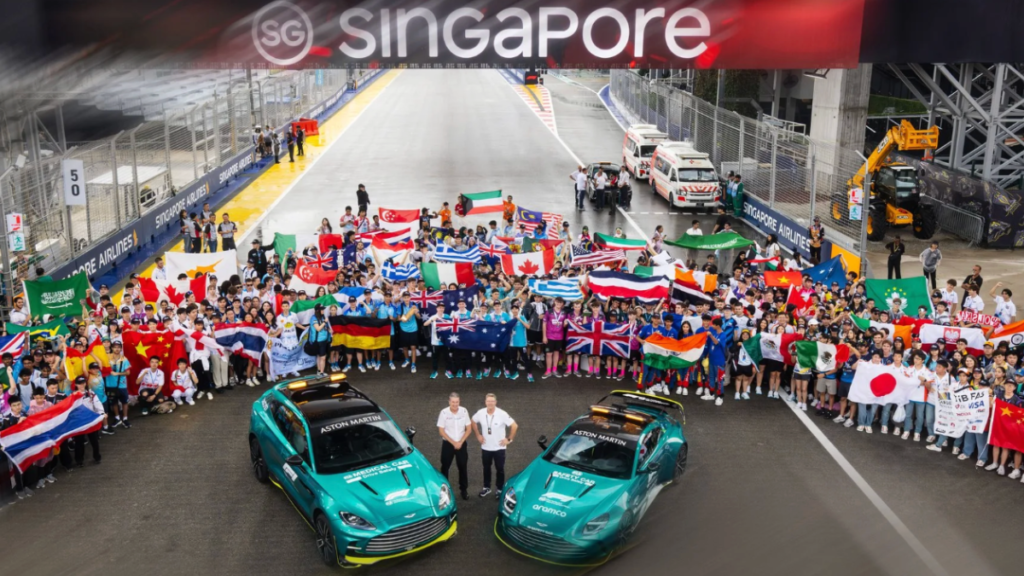
In Singapore, under stadium lights, teenagers stood behind a start line like a pit crew. Not for a toy race, but for a four-lane launch where timing, nerves, and precision decide everything in seconds. Their cars were not remote-controlled. They were engineered. CO₂-powered. Built to strict regulations. Tested, refined, and raced under scrutiny that looks a lot more like a professional review than a school activity.
This is Aramco STEM Racing (formerly F1 in Schools), and it is less “science fair” and more “mini motorsport program.” Teams are judged on engineering and design, yes, but also on how they manage the work, present their thinking, and defend their decisions like a real team would. Over four intense days, expert judges from STEM, motorsport, industry, education, and marketing interrogate the process, not just the outcome.
In 2025, 83 teams from 34 countries lined up at the World Finals, in what organisers described as the biggest finals yet.
And this year, the World Champions were a school team from Melbourne. Lunar, from Brighton Grammar School, beat 82 other teams to take the title, edging out Germany in second and the UK in third. They did not win by “being gifted.” They won by building a system that holds up under pressure: clean design choices, disciplined testing, sharp communication, and the ability to recover fast when something breaks or fails.
Now zoom out for a second, because this is where the headline can mess with your head. You see “World Champions” and your brain jumps to the wrong conclusion: that your child either has it or doesn’t. That is not how these kids got here. They did not wake up with a race car brain. They built one, piece by piece, through the same foundation stack any 7–10-year-old can start training at home: spatial reasoning, measurement sense, prediction, iteration, and calm focus when the first version fails.
Here is what those champions were really practicing, whether they called it that or not.
First, constraint thinking.
A race car project is a puzzle disguised as a build. There are rules, limits, and trade-offs. You cannot do everything, so you have to choose. That is the skill: solving inside boundaries instead of only succeeding when freedom is unlimited.
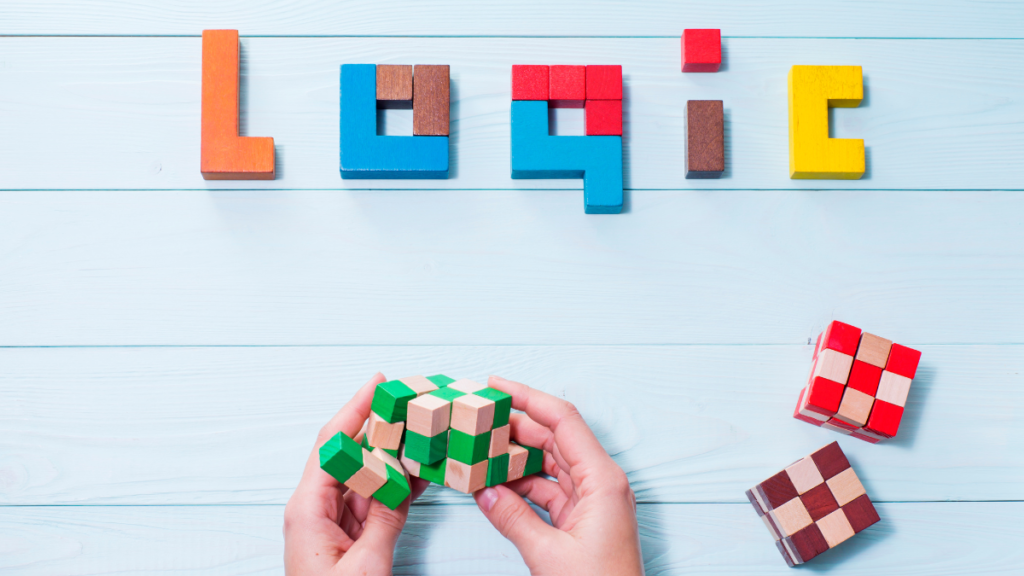
At home, you train this best with puzzles and games where the child cannot “wiggle out” with guessing. You want challenges with a clear target and a clean fail signal. Good options here are constraint puzzles like SmartGames IQ Puzzler Pro / IQ Twist, Educational Insights Kanoodle Extreme, Gigamic Katamino Pocket, or The Genius Square (Mukikim). These are not “math toys.” They are decision trainers. Your child learns to hold rules in mind, try a second approach, and stay steady long enough to finish the loop.
Once your child has a taste for constraints, the next building block becomes natural.
Second, build, break, rebuild.
Engineering is not a one-shot performance. It is iteration. Most kids never get trained for iteration because school rewards first-try correctness, and many homes accidentally rescue too fast when frustration shows up.
In a competition team, something fails daily. The key is not avoiding failure. The key is making failure safe and useful.
At home, you want to build systems that invite corrections instead of punishing them. Track and “systems” kits are perfect because they expose cause and effect immediately. Ravensburger GraviTrax Starter Set (and if you want a step up, GraviTrax PRO expansions) do this extremely well. Marble Run (National Geographic) and Roller Coaster Challenge (Thames & Kosmos) do it in a more guided way, where each challenge forces a specific constraint and a specific correction. These tools quietly teach a child: “The first version is rarely the final version, and that is normal.
Iteration becomes even more powerful when you add the piece most households skip.
Third, measurement and prediction.
This is where engineering becomes real. Not because it looks technical, but because it forces honesty.
Most children make guesses and then move on. The engineering mindset is different. It predicts, tests, measures what happened, and updates the prediction. This is the exact skill that later makes science easier, makes word problems less intimidating, and makes project work less chaotic. It is also the skill behind “how did they get so good” stories, because improvement is just repeated calibration.
You do not need fancy gear for this. You need a small feedback loop.
Pick one tool that makes prediction visible. Stomp Rocket (Original Ultra) is perfect because distance is measurable and changes are obvious. A build-and-drop ramp system like Trestle Tracks Deluxe Set (Fat Brain Toys) does the same thing, because kids learn fast that angle, height, and smoothness change outcomes. Balance-focused tools like Balance Beans (ThinkFun) train prediction through stability and weight. Even a tension-and-balance builder like Suspend teaches load and consequence, because one small decision changes the entire structure.
The point is not which tool you choose. The point is that your child starts living inside a pattern: “I thought X. I tested it. I saw Y. Now I change one thing.”
That naturally leads to the last foundation, which is the one parents usually mistake as personality.
Fourth, calm under failure.
Kids do not quit because they are lazy. They quit because friction feels like a threat. Competitive environments reward kids who can stay composed when the first plan collapses, because they can restart faster than the child who spirals.
This is why the best training toys are not the ones that always feel smooth. They are the ones that create mild frustration and then invite re-entry.
The parenting move here is simple, and it is hard because it feels too small. Praise the middle. Not the win. Not the “you are smart” moment. Praise the moment your child wanted to quit but tried again. Praise the reset. Praise the second attempt. That is how the brain learns that discomfort is not danger.
Now, if your child already does puzzles and you want to take a real step closer to the domain, here is the clean on-ramp.
Start with one “movement build” kit. LEGO Technic vehicle sets are a good entry because they teach mechanisms and build discipline. Tamiya Mini 4WD kits are another strong route if your child enjoys tuning and small changes, because the culture around them is all about iteration, not one-time building. If you want something simpler, balloon-powered car kits or basic motor-and-wheels build kits are great because they turn building into testing quickly.
Then add one measurement loop. Not a lesson. A ritual.
Here is the routine that makes all of this work, even if you buy only one or two items.
You run a 10-minute session, four to five days a week.
Step one is prediction: “What do you think will happen if we change this?”
Step two is one test run, no coaching speech.
Step three is measurement: distance, time, or number of attempts.
Step four is adjustment: “What is the one thing we change next?”
Step five is one more test run, then you stop while the child still feels capable.
That is the loop. It is short enough to survive tired days, and it is structured enough to build real skill.
If you want a simple two-week progression that works with almost any kit or puzzle, use this:
Days 1–3: Keep it embarrassingly easy so habit forms without drama.
Days 4–7: Add one constraint, such as fewer hints or “two tries before asking.”
Days 8–10: Teach the reset. When stuck, they must try one different approach before quitting.
Days 11–14: Increase difficulty, not duration. Harder challenges, same ten minutes.
If your child is already puzzle-fluent, they will not need more time. They will need better structure.
And that is the big takeaway from the mini F1 story. Those kids did not win because they had rare talent. They won because they trained a loop until it became normal. The car is just the proof.