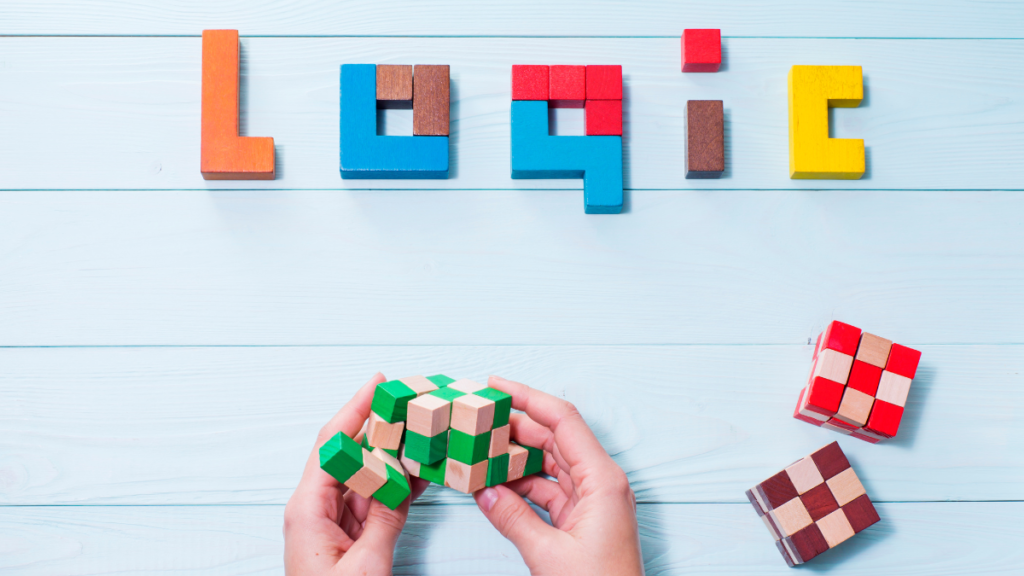
The STEM leak doesn’t start with calculus. It starts in your living room.
It starts when a child is three or four and the house quietly sorts play into two piles. One pile builds, breaks, fixes, experiments. The other pile decorates, cares, performs, stays neat. Most parents do not do this on purpose. They do it because it feels normal. It matches what we grew up seeing. It matches what stores put in front of us. It matches the invisible script of “what a good girl likes.”
Research backs the uncomfortable part: children’s toy preferences show large gender differences on average, and those differences tend to grow with age. Parents also rate same gender typed toys as more desirable than cross gender typed toys, even when nobody thinks of themselves as biased.
So by the time your daughter reaches 11 or 12, the push out rarely looks like someone stopping her. It looks like she is choosing the safer lane.
This is not a Global South problem. It shows up everywhere.
Across OECD countries, fewer girls expect to work in science or engineering than boys do. In the UK, even when girls score highly in GCSE physics, they are far less likely than boys to take Physics A level. In Canada, women still make up less than two fifths of those enrolled in STEM programs. In the United States, women are less represented in STEM occupations than men.
So this is not about “some other place.” It is about how modern environments shape identity and confidence, even in the most developed economies.
What “pushed out quietly” actually looks like
It is not usually a dramatic moment. It is a series of small moments that teach a girl what it costs to belong.
She gives an answer in class and it is wrong. A boy shrugs and tries again next time. A girl often learns a different lesson: don’t risk being wrong in public.
She gets praised for being neat, helpful, and organised. She rarely gets praised for being bold, experimental, or stubborn in the face of a hard problem.
She walks into a robotics club and she is one of two girls. Nobody is rude. But she feels watched. Every mistake feels louder. Every question feels like it proves something.
At 11–12, social life turns up the volume. Being “too intense” can cost status. So she starts keeping her curiosity quieter. She still gets good grades. But she stops reaching.
That is the quiet push out. Not lower ability. Higher cost.
What parents can do that actually changes the trajectory
You do not fix this with a motivational speech. You fix it by changing what your home rewards.
1) Make mess and mistakes safe.
STEM is built on wrong turns. If your daughter feels she must be perfect to belong, she will choose safer subjects. Your home has to make wrong answers feel normal. Not celebrated, just normal.
A useful line: “Cool. Now we know what doesn’t work.”
2) Make competence visible.
Confidence is not a feeling you talk a child into. It is a history of evidence. “I made something work.” “I fixed it.” “I explained what I did.”
This matters because girls are often socialised to hide effort and present polish. STEM needs the opposite. Visible effort and visible debugging.
3) Protect the identity.
Do not say “you’re smart.” Say “you’re the kind of person who figures things out.”
Do not say “be careful.” Say “run one more test.”
You are teaching her what she is allowed to be.
The competence builders (strong picks by age band)
These are not “for girls.” They are for building real capability. The point is to give girls repeated proof, early, that they can build systems that work and stay with problems long enough to improve them.
Ages 5–7: build confidence early, without making it feel like school
Start with tools that make structure visible and failure harmless.
- KAPLA Planks (200 Box) are one of the best “quiet engineering” trainers you can put in a home. No instructions, no fluff. Just balance, stability, collapse, rebuild.
- Tegu magnetic wooden blocks feel like a premium building system, and the magnet constraint forces kids to think about stability instead of only stacking.
- Plus-Plus BIG is excellent for kids who like making objects, creatures, and “real things,” not just towers. It builds spatial thinking without intimidation.
Ages 8–10: move from building to systems and invention
This is the age where “I can build” should turn into “I can design.”
- Connetix magnetic tiles (especially with a ball-run add-on) are not just for pretty shapes. They create repeatable engineering loops where one small change alters the outcome, and kids learn to troubleshoot without melting down.
- Geomag Mechanics is a strong bridge into mechanism thinking. It trains movement, structure, and cause-effect in a way that feels like play but behaves like engineering.
- Strawbees STEAM kits are lightweight, flexible, and surprisingly powerful for design thinking. Kids build, test, change, and explain, which is the habit you are trying to protect.
- Makey Makey Classic is the fastest “I built an invention” confidence builder. It turns everyday objects into inputs and makes kids feel like creators, not consumers.
Ages 11–12: the serious identity jump
This is where many girls start going quiet in STEM. Your job is to keep competence visible and challenge normal.
- ENGINO STEM Mechanics sets (levers, linkages, structures) feel like real engineering because they produce working models. Kids don’t just assemble. They understand.
- fischertechnik STEM kits are another “respect-earning” option. They are built for functional models and clean mechanical thinking, not one-time novelty.
- Makeblock is an entry-level Coding Robot Toy: mBot robot kit is an excellent educational robot toys, designed for learning electronics, robotics and computer programming in a simple and fun way
Ages 13–15: real tools, real projects, real confidence
At this stage, the fastest way to protect STEM identity is to move from “kits” to “projects.”
- The official Arduino Starter Kit is a clean on-ramp into electronics plus coding with a guided path, which matters for teens who quit when the start is unclear.
- A Raspberry Pi setup shifts the game because it is a real computer for real builds: sensors, simple tools, automation, small devices. That portfolio feeling is what makes STEM stick.
- Botley 2.0. If your teen wants robotics, choose a kit with a long runway where they can start simple and scale up. The point is not the robot. The point is the habit of building, debugging, and finishing.
The line to leave with
If your daughter is pulling back, don’t only ask “what happened to her interest?”
Ask “what did the environment start charging her for having it?”
Girls don’t exit STEM because they can’t do it. They exit when it stops feeling worth the social and emotional cost. Your job is to lower that cost at home, and raise her evidence of competence until STEM feels like her territory again.