If you have a child between 8 and 12, you’ve probably done some version of this.
It’s early January. School is about to start again. You feel a mix of hope and pressure. You think of how the last year went and think, “We can do better.”
So you start making a plan.
You think you require a new routine. Or maybe adding tuition or a learning app to supplement your kid’s education skills. Or you just start making a list of activities that looks, on paper, like a serious parent has taken charge.
And for a week or two, it works. Everyone is trying. You feel organised. Your child looks busy. You feel relieved.
Then comes February. And you see the energy dropping. School pressure returns. The routine starts to wobble. Your child starts resisting and you are getting annoyed And not even before the first quarter of the year, you’re left with the same question you had last year:
Why didn’t it stick?
And, here’s the uncomfortable answer: the plan often fails because it is built around the wrong idea of progress.
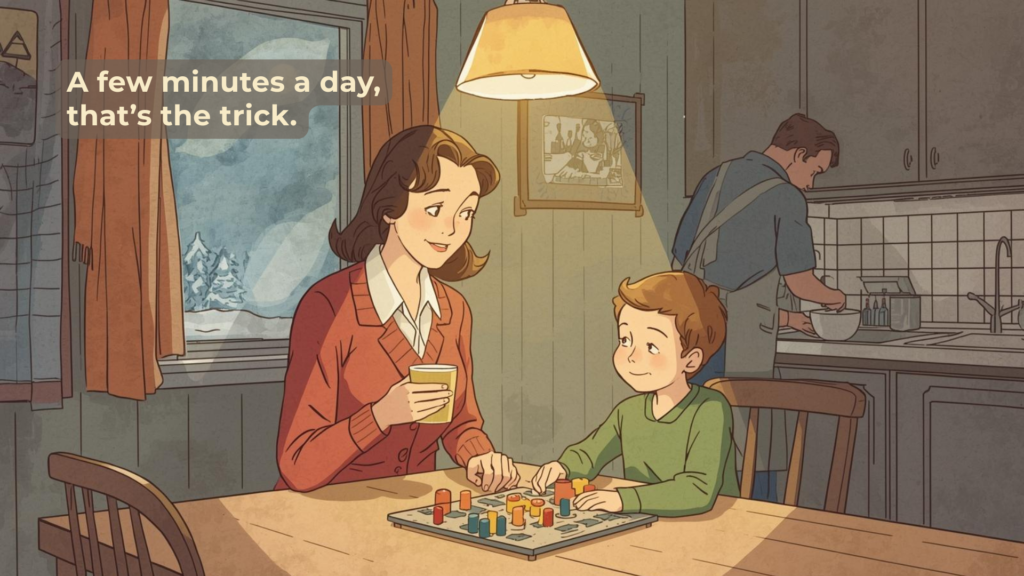
We call it a January mistake. Most parents during this month try to improve learning by adding more input in the shape of more work, more structure, and more “productive” time. We confuse system skills with content skills. And therefore, try to burden the plan with a lot of activities.
We want our children to plan. To manage themselves. To stick to things they start. To recover when they slip. To handle frustration without falling apart. To finish what they started. We recognise this has become more challenging with the scroll-culture which has significantly impacted the children’s attention span. Not just the children, but the adults are suffering the same. So the solution to this problem is not to make your children busy with a lot of activities. It is to ensure your child repeatedly practices controlling their own behaviour in small, real situations.
And unfortunately, most January plans do not consider that practice and only try to inflict more adult control to their lives.
Let’s take a deeper look to analyse why January plans fail
January plans don’t usually die because the plan is “bad.” They die because the plan trains the wrong thing. It trains the child to “be managed”. And then we’re surprised when they don’t manage themselves.
There are three predictable failure points.
1) You build a system that runs on you
For two weeks, your child looks disciplined. They sit. They comply. They finish.
That is not self-regulation. That is borrowed regulation.
Self-regulation is the skill of starting without being pushed, staying consistent even when it gets dull, pausing before reacting, and coming back after a slip. Those things only grow when a child has to do some of the driving on its own.
Most January plans remove the driving. They replace it with adult fuel.
So when your fuel drops in February (work, fatigue, school chaos), the whole machine stalls. And the children are not to be blamed here because it is not them who failed, it was the parent engine trying to drive that could not remain consistent to it.
2) Planning is not a timetable
A timetable is easy to enforce. Planning is not.
Planning lives inside the moment:
- “What do I start with?”
- “What’s my next move?”
- “I’m stuck. Do I try again or switch approach?”
- “I want to quit. Can I stay for five more minutes and try again?”
A child can follow a perfect 6pm routine set by the parent and still have weak planning. Because planning is not a rule they obey. It’s a skill they can only grow through practice.
When you do all the planning for them, you get a smooth evening. But you don’t get a more capable child.
3) January runs on excitement. Skills run on systems.
January is a high-energy month. It feels like a clean slate for all of us. Suddenly everything starts to feel possible and things we can accomplish.
But skills are built in the boring weeks. The tired weeks. The weeks where nothing feels inspiring.
If your plan only depends on motivation, it will fail. Not because your child is weak. Because motivation is unstable.
What works is a system that is small enough to survive low-energy days.
So what to do instead: Stop chasing intensity and build a scaffold your child can own
The fix is not to do nothing. It’s to stop chasing intensity and start building something small but repeatable.
A scaffold is not a strict schedule. It’s a simple frame your child can step into, even on low-energy days.
It has three parts.
Step 1: Make the routine almost embarrassingly small
Aim for 10–20 minutes. One activity. Clear finish.
Not because small is “cute.” Because small survives a longer period of time and sticks.
For example: After homework (or after dinner), set a 10-minute timer. Your child chooses one challenge. When the timer ends, you stop. Even if they beg for more. Even if they’re mid-way. That last part matters: stopping on time teaches control. Dragging it longer teaches negotiation.
Step 2: Give your child a tight menu of choices
Self-regulation grows when your child makes small decisions and lives with them.
You don’t need unlimited freedom. Just a short menu of good options.
For example, offer 2–3 choices: a puzzle, a short strategy game or a building challenge?
Let your child choose one.
This does two things:
- resistance drops, because choice removes the “you’re forcing me” feeling
- planning begins, because choosing is the first planning act
Step 3: Add a 60-second review loop (this is where skill actually compounds)
Most parents skip this part.therefore, most routines fail because they never improve. They repeat, but they don’t learn.
So end with two questions:
- What felt hard today?
- What will we do differently next time?
No lecture. No fixing. Just noticing and adjusting.
That loop teaches something school rarely teaches directly: how to respond to friction without collapsing.
That’s planning. That’s self-management. That’s the point.
Three routines that build the “system skills” you actually want
1) Daily 10-minute puzzle (the “show up even on tired days” routine)
Pick one short puzzle and make it the default. Same time, same place, same rule: finish the attempt even if you don’t solve it. This is where self-regulation gets trained: staying calm, trying again, and not quitting the moment it gets annoying.
Try to go to another puzzle game only once your child has completed or has significantly advanced the skill.
Try this (10-minute puzzle picks on Amazon):
- Rush Hour (levels up well; great for planning moves ahead)
- Kanoodle (quick spatial challenges; easy daily habit)
- IQ Puzzler Pro (progressive difficulty; compact)
- Gravity Maze (logic + building; teaches planning before action)
- IQ Twist (tight, quick logic; very “one challenge a day”)
- TipOver (sequencing + route planning; good difficulty curve)
- Perplexus Epic (patience + error-correction; strong persistence training)
2) Short strategy game (10-20 minutes)
Short, turn-based strategy games do something worksheets don’t: they force a child to pause. They learn that rushing has consequences. They learn to plan one or two moves ahead. They also learn to lose without falling apart which isquietly one of the most valuable skills in a house.
How to run it: 1 game, then stop. If you have time, play again. But don’t turn it into an endless session. Keep it a clean loop that’s easy to repeat.
Try this (2-player strategy picks on Amazon):
- Onitama (fast, chess-like, great for planning and restraint)
- Quoridor / Quoridor Mini (block + race; planning under pressure)
- Pentago (pattern + rotation; quick but surprisingly strategic)
- Schotten Totten (tactical choices + risk control; very teachable)
- Codenames: Duet (co-op clue logic; constraint-based thinking)
- Blokus Duo (spatial planning + blocking; quick rounds)
- Mancala (classic sequencing + delayed gratification)
3) Weekly family session (40–60 minutes)
This is your weekly anchor. It builds planning skills, communication, and emotional regulation because kids are playing in a social setting with rules, trade-offs, and real feedback. The trick is to make it feel like a ritual, not a lesson.
How to run it: Let your child choose the game from a small menu. At the end, do a 60-second review: What was hard today? What will we do differently next time?
That tiny loop turns “game night” into planning practice without anyone feeling coached.
Family games that fit the time and build the right skills:
- Ticket to Ride(planning + adapting when blocked)
- Pandemic (co-op planning; great for team roles and calm decisions)
- Carcassonne (simple entry, strategic depth; easy for mixed ages)
- Mysterium (communication + interpretation; very family-friendly)
- The Quest for El Dorado (planning + adjustment; energetic and smart)
- CATAN (trade-offs + negotiation; can run long but strong skill-builder)
- Wingspan (long-view planning; may be closer to 60–75 minutes)
Special learning needs note: the scaffold still works for children with special learning needs. You adjust the dose: ensure shorter timer, fewer choices, lower sensory load, clearer start/finish and provide more reassurance when things feel hard.